
Let’s talk about starting a book club.
We’re not talking about a book club that costs $25 a month to join. Nor one that requires an application, a waitlist, a branded tote bag, and a three-month onboarding process. We’re also not talking about how to monetize your book club do it eventually becomes a second full-time job.
We’re talking about a good old-fashioned book club. Where a group of people who enjoy reading, gathering, talking about books, discovering new authors, and occasionally ruining their TBR because somebody at book club wouldn’t shut up about their last read. Actually, several somebodies.
Specifically, a book club that centers Black literature and creates opportunities for people to build community around it.
If you’ve been thinking about starting one, welcome friend. Pull up a chair.
I’m sharing what I’ve learned from building Black Lit., a free-to-join book club in the DMV, along with the questions, practical steps, and resources I wish every aspiring book club leader had before getting started.
This isn’t a guide to building a business. It’s a guide to building a community.
1. Before you pick a name, figure out your WHY
First things first: Why do you even want to start a book club?
Your reason for starting a book club will influence almost every decision you make afterward. It will inform the books you select, the people you invite, the frequency of your meetings, and the kind of environment you want to create.
For me, Black Lit. started with a desire for a third space.
While living in Austin, Texas, the book clubs I participated in were some of the things that genuinely kept me sane. They gave me somewhere to go, BLACK people to talk to, and a sense of connection that I desperately needed. When my husband and I decided to move back to the East Coast, specifically the DC area, I started looking for my future third space.
I knew what worked for me:
Free to join
Meets regularly
Reads Black authors exclusively
Creates opportunities to connect with other readers
I couldn’t find what I was looking for, so I created it. And that is a perfectly good reason to start a book club.
Maybe you want to read more Black literature. Maybe you’re tired of being the only person in your friend group who wants to discuss a book. Maybe you want to create an intergenerational reading community. Maybe you’re looking for an opportunity to connect with other Black readers in your city. Whatever your reason, start there.
DIY REFLECTION: Find your WHY
Before doing anything else, answer these questions:
What’s motivating me to start a book club?
What am I currently missing from my reading or social life?
What kind of community do I want to create?
Who do I imagine participating?
What do I want people to experience when they attend?
What would make this book club meaningful to me, even if it never grew beyond ten members?
That last question might be the most important one, honestly. You need to decide what success looks like before other people decide it for you.
2. Define What Your Book Club Actually Is
Now that you know why you’re starting a book club, let’s figure out what you’re building.
According to the internet, one of the biggest mistakes new organizers can make is trying to appeal to everybody.
You don’t need to. I definitely don’t.
A book club can center Black literature without having the exact same audience, structure, or reading interests as another Black literary community.
For example, Black Lit. centers Black authors exclusively. Our reading interests span across fiction genres including: historical fiction, horror, romance, literary fiction, speculative fiction, memoir, and more.
Someone else might want to start a book club exclusively for Black science fiction readers. Another person might want a group dedicated to contemporary Black women writers. Someone else might want a multigenerational community that reads Black classics. Someone else might not even want the community to be multigenerational.
All of those are valid.
The important thing is being able to communicate what people are joining.
Start with these five decisions:
A. Your reading focus
What will your group read?
Black authors exclusively?
BIPOC authors more broadly?
A particular genre?
Contemporary literature?
Classic and historical works?
A combination of fiction and nonfiction?
You don’t have to limit your reading interests to one genre, but you should establish what makes your book club distinct.
B. Your intended audience
Who are you hoping to bring together?
Anyone interested in Black literature? Black women and femmes? Local readers? College students? Working professionals? Retirees?
Think about who you want in the room and whether your meeting structure will accommodate them.
C. Your format
Will you meet:
In person?
Virtually?
A combination of both?
Once a month?
Every other month?
My recommendation for a new book club is to start with one predictable meeting per month. You can always add more programming later.
D. Your membership structure
For this guide, we’re keeping it simple: free and open membership.
People should be able to discover your book club, understand what it’s about, and join without a financial barrier. Free membership doesn’t mean there can’t be expectations. It means access isn’t contingent on someone’s ability to pay.
E. Your community values
What are your nonnegotiables?
For Black Lit., those are:
Centering Black authors.
Community safety.
Free and open membership.
These values are the foundation of the community, not just nice words for an About page.
DIY ACTIVITY: Write Your Book Club’s Mission Statement
Use this template:
“Our book club exists to bring together [who] through [reading focus or shared interest]. We believe in [core values] and aim to create a community where [desired experience or outcome].”
Example:
“Our book club exists to bring together readers who want to explore, celebrate, and discuss literature written by Black authors. We believe in accessible literary community, meaningful conversation, and creating spaces where readers can connect through the written word.”
You can refine this as your group develops. It doesn’t have to be perfect on day one.
3. Build the infrastructure BEFORE you announce the book club
I really can’t express this enough. I know you’re excited. You decided to finally do this thing, you have the perfect name, you even know what book you want to read first. You’ve probably already started a Pinterest board. Maybe you’ve even made a Canva flyer.
I get it, I really do.
BUT before you announce your new book club to the world, there are a few things you should establish.
Think of this as your behind-the-scenes setup.
1. Choose your communication platform.
How will members communicate with you and one another?
Some options include:
GroupMe: Useful for ongoing group conversations and announcements.
WhatsApp: Helpful for communities that prefer a mobile messaging platform.
Facebook Groups: Useful for groups that want discussions, event announcements, and a centralized community space.
Discord: An option for groups interested in creating multiple topic-specific channels.
Email newsletters: Helpful for people who don’t want another group chat notification.
When I started Black Lit., I used Meetup to find my first members. In fact, many of those original members are still some of the most consistent people in the community.
However, because I wanted to keep the group free, I eventually moved the community to GroupMe.
That gave us a place to communicate without making a paid membership platform part of the equation.
You don’t need every platform. Pick one primary home for your members and make it easy to find.
2. Establish your meeting schedule.
Consistency is one of the best things you can offer members.
If people know you meet on the last Saturday of every month, they can plan around it. You don’t need to meet every week and you don’t need to host a literary festival every quarter.
Start with a schedule you can realistically maintain.
3. Create a basic digital presence.

Black Lit. book club meeting at Barnes and Noble Potomac Yard Feb. 2026
At minimum, establish:
A book club name
A short description
A way for people to contact you
A place to find meeting information
A process for joining the community
A calendar or list of upcoming meetings
You can use a simple social media page, website, or community platform. You don’t need to purchase a domain or build a website before your first meeting.
4. Create a system for tracking the books.
This will save you headaches later.
Keep a record of:
Books you’ve read
Authors featured
Meeting dates
Future selections
Discussion questions
Member suggestions
A simple Google Sheet will do.
You may think you’ll remember everything. You won’t. Trust me.
5. Establish your community guidelines.
More on this in a moment, but please don’t wait until there’s a disagreement to decide how your community should operate.
A little intentionality now can prevent a lot of unnecessary drama later.
4. Find a Free Place to Gather (Yes, They Exist!)
Let’s talk about one of the biggest logistical questions: Where are you going to meet?
A beautiful bookstore with a private event room sounds lovely. So does a cute café with a dedicated meeting space.
But if you’re starting a free book club, you probably don’t want to spend $150 every month renting a room.
The good news is that you have options.
Option 1: Your local library
Please do not underestimate your library card.
Public libraries are among the first places I’d recommend contacting when starting a community book club.
Many library systems offer meeting rooms that community members and local organizations can reserve at no cost, although eligibility, availability, and room policies vary.
Some libraries also have established book club programs and may be interested in supporting an independent reading community.
What to do:
Visit your local library’s website.
Search for meeting rooms, community rooms, or room reservations.
Review the eligibility and reservation requirements.
Contact the branch directly if the policy isn’t clear.
Ask whether recurring monthly reservations are possible.
Don’t assume that every library allows recurring reservations or that every room is available for outside groups. Ask!
Option 2: Barnes & Noble and independent bookstores
This is where I encourage you to get comfortable asking.
I reached out to Barnes & Noble because I knew they were familiar with hosting book clubs. I asked whether we could get on their calendar.
Heather at the Potomac Yards location has been nothing short of amazing to work with.
That relationship has been instrumental in creating a consistent home for our monthly gatherings.
Here’s my advice: Don’t just walk into a bookstore and announce that you’re starting a book club.
Introduce yourself. Explain your concept. Share the size of your group, your meeting frequency, and why you think the bookstore would be a good fit.
Ask whether they host independent book clubs, whether there are any associated fees, and what their scheduling requirements are.
Also, be prepared for the answer to be no. Bookstores have limited space, staffing considerations, and their own programming schedules.
Option 3: Black-owned businesses
This is an opportunity to build relationships beyond your book club.
As Black Lit. has grown, I’ve been intentional about forming relationships with local Black business owners.
Why?
Because I want to support the businesses in the community, and I also want to create opportunities for our members to discover places they might not otherwise visit.
Consider reaching out to:
Black-owned bookstores
Coffee shops
Restaurants with community space
Art galleries
Cultural centers
Black-owned coworking spaces
Community organizations
You don’t necessarily need to ask someone to give you space for free without offering anything in return.
Think about what a mutually beneficial relationship could look like.
Perhaps your members purchase refreshments. Maybe you agree to promote the business (social presence dependent). Maybe you host an occasional gathering that introduces new customers to the space.
Be clear about your needs and respectful of the owner’s time and business.
And remember: A free venue isn’t worth creating an unsustainable financial burden for a small business owner.
Option 4: Community centers and neighborhood organizations
Check with your local recreation department, neighborhood association, community center, and nonprofit organizations.
Some have rooms available to residents or community groups at no cost.
You may need to establish residency, register your group, or meet certain requirements.
Option 5: Parks and outdoor spaces
When the weather cooperates, consider taking your book club outside.
Parks, picnic areas, and public outdoor spaces can be wonderful alternatives to indoor meetings.
Check local rules about reservations, group size, permits, and amplified sound.
My free-space scouting checklist
Before committing to a location, consider:
Is the space actually free?
Is it accessible by public transportation?
Is there parking?
Is the location physically accessible?
Can members hear one another comfortably?
Are food and beverages allowed?
Are there restrooms?
Can you reserve the space consistently?
Is there a cancellation policy?
Is the space comfortable for the anticipated group size?
A note on accessibility: Don’t make assumptions about what members need. Consider asking about accessibility when people register for an event, and provide a way to communicate accommodation requests.
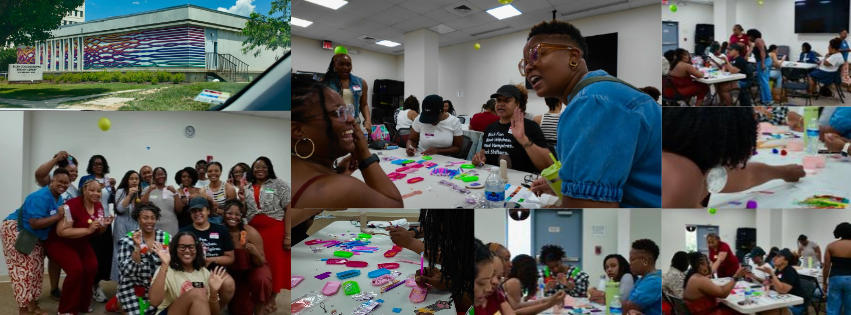
bookmark making event hosted at local library branch
A sample outreach email
Subject: Community Book Club Meeting Space Inquiry
Hello!
My name is [Name], and I’m the organizer of [Book Club Name], a community book club focused on bringing local readers together through Black literature.
We’re currently looking for a welcoming space to host our monthly gatherings. Our meetings typically include [brief description], and we anticipate approximately [number] attendees.
I wanted to inquire about whether your location offers meeting space for independent community book clubs and whether there may be an opportunity to reserve space on a recurring basis.
We would love to learn more about your availability, policies, and any associated costs.
Thank you for your consideration! I look forward to hearing from you.
Best,
[Name]
[Book Club Name]
[Contact Information]
5. Recruit your first members (you don’t need 100 people)
Now for the fun part: finding your people.
One thing that continues to surprise me about leading Black Lit. is that people actually show up. Not only do people show up, but new people find their way to us every single time.
I think there’s something beautiful about that.
When I started, I used Meetup to find my first members. Some of those original members are still among the most consistent people in our community. Since then, our growth has been organic. I share the book club on social media. I respond to people looking for book clubs in the area. Members invite their friends. People hear about us through other people.
That’s the thing about community: Your members become your best ambassadors.
Where to find your first members:
Meetup: A useful discovery platform for people actively looking for local groups.
Instagram: Share your reading selections, meeting photos, and event announcements.
Threads: Yes, you should treat this separate from Instagram. Specifically tag your local community!
Facebook Groups: Look for local reading groups and community forums where promotion is permitted.
Reddit: Participate in relevant local and book-focused communities, following each community’s posting rules.
Libraries and bookstores: Ask whether they have community bulletin boards or event listings.
Word of mouth: Tell your friends, coworkers, family, and existing reading community.
Local community calendars: Submit your events where permitted.
A few recruitment tips:
Make it easy to understand what your book club is about.
Include the location, frequency, and cost (free!) in your announcements.
Tell people what to expect at their first meeting.
Give them a clear way to join.
Don’t make people feel like they need to know someone to participate.
And please don’t confuse follower count with community.
You can have 10,000 social media followers and still struggle to get ten people into a room. You can also have a small online presence and build a wonderfully consistent local book club.
Focus on creating an experience people want to return to.
6. Establish Community Guidelines before you need them
This is important.
A book club is not just a group of people who happen to read the same book. You’re creating a space where people are going to share opinions, experiences, interpretations, and sometimes personal stories.
Not everybody will agree. And that’s okay.
In fact, disagreement can make a discussion more interesting. But there’s a difference between disagreeing about a character’s motivations and making another member feel unwelcome or unsafe.
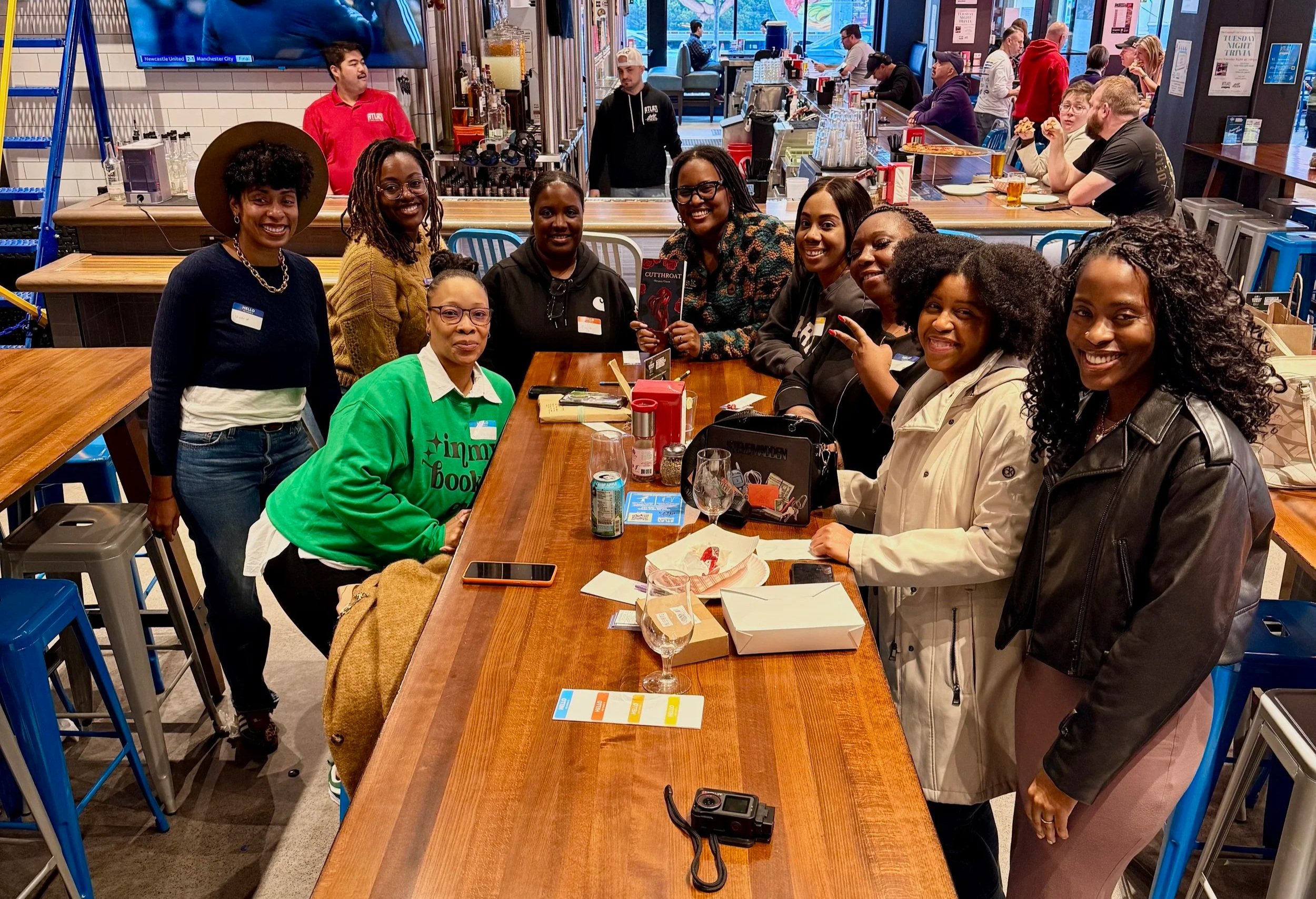
inaugural book club meeting Nov 2025
At Black Lit., community safety is one of my nonnegotiables.
Here are some things I’d recommend addressing before your first meeting:
Respectful conversation
Members should be able to disagree without being dismissive, condescending, or disrespectful.
Make room for different perspectives
Not everybody approaches literature the same way. Some members may have academic backgrounds. Others may be casual readers. Some will have read every book by a particular author, while others may be encountering that author for the first time.
All of those readers belong in the conversation.
Don’t require everyone to finish the book
Life happens. Work happens. Families happen. Sometimes the book just isn’t hitting.
Encourage participation regardless of whether someone has finished reading. Establish spoiler expectations so members who haven’t finished can still participate comfortably.
Respect confidentiality
If someone shares something personal during a meeting, don’t turn it into group chat entertainment.
Be mindful of participation
Don’t dominate the conversation. Make room for quieter members. Don’t assume that the person who talks the most has the most valuable perspective.
Protect the community’s purpose
If your book club exists to center Black authors, keep that commitment visible in your programming and book selections.
Remember that the organizer is a person, too
This might be one of the most important lessons.
You are not an unlimited customer service department. You have a life outside of the book club.
Establish reasonable expectations around communication, cancellations, event questions, and your availability.
You can care deeply about a community without being available to it 24 hours a day.
DIY ACTIVITY: Create your Community Agreement
Complete these statements:
In this book club, we value…
Members are expected to…
We encourage disagreement by…
We handle conflict by…
We protect community safety by…
Our commitment to Black literature means…
As the organizer, I commit to…
As members, we commit to…
Share these expectations with members before or during the first meeting. Revisit them as needed.
7. Plan your first book club meeting
You have your name. You have your communication platform. You have a location. You have a few people interested.
Now what?
First, take a breath.
Your first meeting doesn’t need to be an elaborate production.
You don’t need branded merchandise, elaborate decorations, custom bookmarks, or a professional photographer. You need a way to introduce people, establish the purpose of the group, and create an opportunity for conversation.
For your first meeting, I recommend spending less time trying to have the perfect literary discussion and more time helping people get comfortable. After all, you’re not just introducing a book. You’re introducing people to one another.
Sample 90-minute first meeting agenda
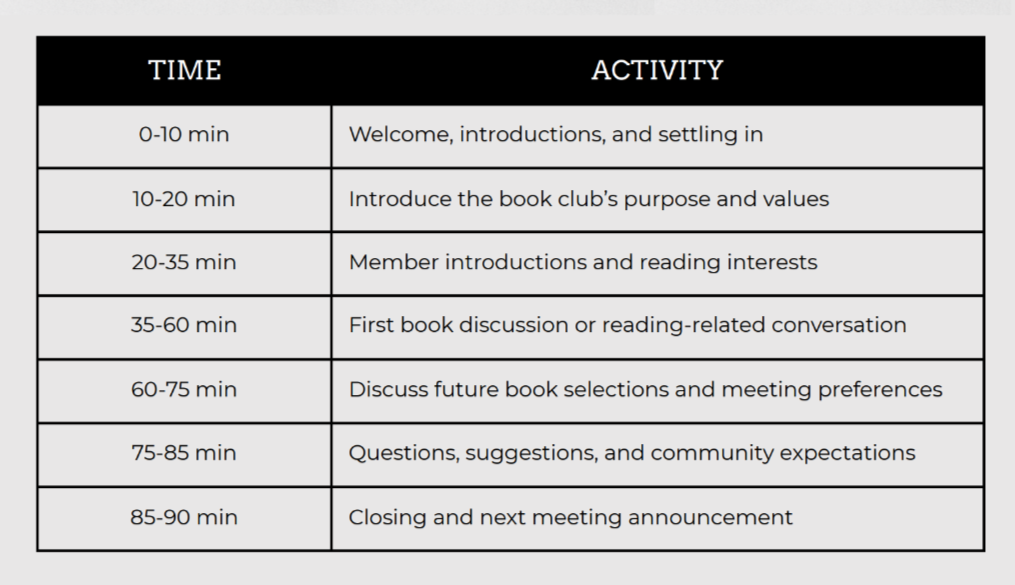
A few introductory questions:
What’s the last book you couldn’t stop thinking about?
Who is an author you think everybody should read?
What genre do you find yourself reaching for most often?
What’s a book that changed how you see something?
What are you hoping to get out of this community?
You can also ask members what they want their book club experience to look like.
Just remember: You’re gathering feedback, not conducting a referendum on every decision you’ll ever make.
As the organizer, you’ll still need to make decisions and establish direction.
8. Decide how you’ll choose books
Book selection can become one of the most exciting parts of leading a book club.
It can also become one of the most exhausting.
There are a few ways to approach it.
Organizer-selected reading lists
You select the books based on your club’s reading focus, interests, and goals.
This gives you more control and makes planning easier.
Member nominations
Members suggest books, and you select from the nominations.
This creates opportunities for members to feel invested in the reading experience.
Group voting
Members nominate books and vote on what the group reads next.
This can be fun, but it can also become a logistical headache if you don’t establish a clear process.
Themed reading calendars
You create monthly or quarterly themes. For example:
January: Black literary classics.
February: Black love and romance.
March: Black women in literature.
October: Black horror and speculative fiction.
November: Black family stories.
The possibilities are endless.
My recommendation? Choose a process that doesn’t require you to spend every month managing a democratic election.
You can invite member input while maintaining a clear selection process.
For our first book club year, I preselected all of the books. For the 2027 book club year, I preselected 24 books across genres for members to vote on. There are literally endless ways to get this done.
A few things to consider when selecting books:
Is the book accessible to members?
Is it available at local libraries?
Is it reasonably priced?
Is it available in multiple formats?
Is it appropriate for your intended audience?
Will it create opportunities for discussion?
Does it align with your club’s reading focus?
One more thing: Think about the financial realities of your members.
If you’re running a free book club, requiring everyone to purchase a $30 hardcover every month creates an unnecessary barrier.
Encourage library borrowing, used copies, ebooks, audiobooks, and other affordable options.
Bonus Tip: Ensure newly released book club picks have a meeting date at least six weeks after the publication date.
Free to join should mean that people have a realistic opportunity to participate.
9. The First 90 Days: From Idea to Community
You do not need to build everything at once.
In fact, I’d encourage you not to.
Give yourself time to establish the basics, recruit members, and learn what works.
Days 1–30: Build the foundation
Write your mission statement
Define your reading focus and intended audience
Choose a name
Establish your community guidelines
Select your communication platform
Research free meeting locations
Identify your first book
Decide on a consistent meeting schedule
Days 31–60: Recruit and prepare
Announce the book club
Create a simple social media presence
Invite your existing reading community
Establish your member communication process
Confirm your first meeting location
Share the first book selection
Prepare your introductory meeting agenda
Send reminders before the first meeting
Days 61–90: Launch and learn
Host your first meeting
Introduce members to one another
Collect feedback
Announce the next meeting
Share upcoming reading selections
Invite members to bring a friend
Reflect on what worked and what needs adjusting
And then do it again.
That’s the secret nobody really talks about: Community building is repetitive.
You announce the meeting. You remind people. You show up. You facilitate the conversation. You thank everyone for coming. You plan the next one.
And eventually, people start showing up without needing to be reminded quite as much. They bring friends. They recognize one another. They start asking about the next book.
That’s when you begin to see the community taking shape.
10. Things I Wish I Had Known Before Starting a Book Club
Let me leave you with a few lessons from the other side.
People will show up. Give them a reason to return.
I still find it surprising how consistently people find their way to Black Lit. But getting people through the door is only one part of the work.
Think about the experience you’re creating. Are people welcomed? Are they included? Do they have opportunities to connect beyond the book itself?
You don’t have to be an expert on every book.
You’re the organizer, not the literary authority responsible for having the final word on every discussion.
You can facilitate a meaningful conversation without knowing everything about the author, the historical context, or every possible interpretation. Be curious. Read alongside your members. Learn together.
Your members will help shape the community.
Some of your best ideas might come from people who attend your meetings.
Ask for feedback and listen to it. Pay attention to what members respond to. Be open to trying new things.
But remember that you are allowed to have a vision and direction for the group.
Don’t build a community you cannot sustain.
This is especially important when your membership is free.
Your time is valuable. Your labor is valuable. Your ability to continue showing up matters.
Start small. Establish boundaries. Don’t promise programming you cannot realistically deliver. And please, don’t feel obligated to turn every book club meeting into a production.
Sometimes the best gathering is ten people, a good book, and a two-hour conversation that somehow manages to touch on everything from childhood memories to the state of the world.
Free doesn’t mean without value.
A free book club can be organized, intentional, intellectually stimulating, and deeply meaningful.
You do not need a paid membership model to create something worth people’s time.
There are plenty of ways to sustain a free community through partnerships, donated resources, volunteer contributions, and relationships with local businesses. You can also simply keep the programming manageable and operate within the resources you have.
You don’t owe anyone a monetization strategy.
And finally: You don’t need permission to create the community you’re looking for.
Sometimes the space doesn’t exist yet because nobody has built it.
Maybe you’re the person who’s supposed to.
Last thing: Build the Third Space You Want to See
When I started looking for my next third space after moving back to the East Coast, I wasn’t looking to become a book club director. I was looking for somewhere to read, connect, and spend time with people who shared an interest in Black literature.
I couldn’t find exactly what I wanted, so I created it.
Black Lit. has become something I genuinely cherish. It’s a place where people can discover authors, discuss books, meet new people, and build relationships that extend beyond our monthly reading selections.
And while I certainly didn’t have everything figured out when I started, I’m glad I didn’t let that stop me.
If you’ve been thinking about starting a book club, I hope this gives you the nudge you need.
Start with a few people. Find a place to gather. Pick a book. Send the invitation.
You don’t need to have the next big literary institution on your hands. You just need to be willing to open the door.
And if you build it with intention, you might be surprised by who walks through it.
Happy reading, and happy community building.
— Tye Elder, Black Lit. Book Club
A practical DIY workbook for building a free, community-centered book club around Black literature.
